|
Asbestos is a naturally occurring fibrous mineral. It is mined and
processed like other minerals. It is popular for it’s binding,
insulating, heat and chemical resisting properties. The three most
common types of asbestos are: chrysotile, amosite, and crocidolite.
Chrysotile is the most common, used in hundreds of different applications.
Asbestos is made of microscopic bundles of fibers. These bundles can be
broken down into fibers 700 times smaller than the diameter of a human hair.
Asbestos Images |
 |
 |
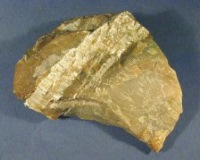
| Asbestos in mineral form: |
Microscopic view of Asbestos fibers: |
Asbestos can be found in over 3,000 construction products. Many of
these products were produced in the past, but are still in place in
many previously built buildings and structures. Asbestos was used in
insulation, drywall as a binding agent, pipe system insulation,
surfacing materials like spray-on fire proofing for beams and ceilings.
It is also used for fire doors and heat barriers, and is in special fabrics
and textiles. Asbestos fibers can be found in many adhesives and even in
roofing products. Asbestos is still used in transportation in brake linings
on airplanes, large trucks, and tractors.
|
|
The term “friable” means that the material can be crumbled or reduced
to powder by hand pressure when dry. CSU has both friable and
non-friable ACM’s (Asbestos Containing Materials) in buildings.
Examples of friable ACM are: ceiling tiles, pipe insulation (TSI)
on steam systems and boilers, blown insulation, duct work insulation,
and spray-on fire proofing.
Examples of non-friable ACM are: floor tiles, adhesives, roofing
products, flexible duct connectors, transite panels and counter tops.
It’s even in some lab gloves to insulate against extreme heat.
There are transite pipes buried on campus carrying steam and water.
|
|
|
Asbestos is made up of microscopic bundles of fibers that may become
airborne when disturbed. These fibers get into the air and may be
inhaled into the lungs, where they may cause health problems.
Inhalation is the only method of entry that has been proven to
cause adverse health effects. Most of the fibers get trapped in
the nose, throat or trachea. Fibers in these areas are expelled
when you cough, sneeze or blow your nose. When fibers reach the
lungs, damage may occur. The Alveoli (tiny air sacs in lungs) are
especially susceptible.
As asbestos fibers are inhaled, they may become trapped in the
lung tissue. The body tries to dissolve the fibers by
producing an acid. This acid, due to the chemical resistance of the
fiber, does little to damage the fiber, but may scar the surrounding
tissue. Eventually, this scarring may become so severe that the lungs
cannot function. Health threats as extreme as this usually take repeat
exposures at abnormally high concentration levels. Repeated or high
dose exposures can lead to a disease known as asbestosis. This disease
is very debilitating and the latency period is often 20-40 years.
Smoking may greatly increase cancers associated with asbestos inhalation
exposures.
|
|